
Happiness Guilt

Yup, it’s a real thing. People feel guilty about feeling happy. Humans are strange, complex, and fascinating beings. I’ve said before we don’t experience emotions in a vacuum – we’re not just happy, sad, angry, or any other emotion. We’re never 100% pure on a singular emotion… and that’s what can make guilt and happiness so weird to interact.

I know lots of people feel guilty surrounding the loss of a pet – whether it was your decision or not. Ripples of guilt are a normal response to loss. Feeling this does not mean you have done something wrong – it means you are human. If you think of it like water, it’s usually a little trickle of a stream that flows around the edges of life – it’s there, but hardly any attention is paid to it. Then there’s this seismic shake up with loss; much like the Grand Canyon, that little trickle is a flood carving out everything in its path. Everything feels bigger and more pronounced right now.

The gap from one emotion to another is now huge. Happiness is now on the other side of that canyon. People say they feel like they should be [insert emotion] instead of happy. I get it – it doesn’t feel right to laugh when the situation is so serious. People may seem to judge us for not being sad enough. Yet, laughing can be a great thing to do! I’ve done a laughing meditation with my support group before, and they have told me it feels good to laugh, to increase the dopamine levels, and to feel a pause in their loss.

Laughing meditation (or laughing yoga) increases oxygen into the body, increases epinephrine and dopamine, boosts the immune system, and triggers the parasympathetic nervous system.

I have a lot of Irish heritage in me. While I haven’t been to a full Irish wake, I’ve seen glimpses of them as I’ve joked with family at wakes and funerals. I’ve seen the funeral marches found in New Orleans. Both of these examples honor the serious of the situation while celebrating the life still in the room – the time to cry and the time to laugh. They bump up one another. Yup, it’s uncomfortable at first, and I know it’s not for every situation… but, it is okay to feel your lungs expand to take in the air around you. It would take time to fill in the Grand Canyon with pebbles – honestly, we’d have to figure out where to find that many pebbles! So, start with a few things here and there. Start with a smile, chuckle, or a smirk and shake of the head. Laugh and cry at the same time. Happiness guilt is a marker on the journey but not the end point.


Additional reading on this topic:

Headspace meditations on “The After Series” – Happiness during grief

Pathways home health “Is it OK to be happy during grief?

Hospice Red River Valley “4 tips to deal with happiness guilt.

Learning from past relationships for today’s loss

Most people start a grief journey with a kaleidoscope of emotions and worry about where to start. Maybe it’s an American thing that we want to do things “right,” and that includes how we grieve, so we worry about grieving correctly. I’m gonna stop you here and say you cannot do this wrong. I have only 2 rules: You cannot harm yourself, and you cannot harm others. Everything after that is how you get through and survive this moment.

So, let’s talk about that. You have survival guides built right into you. You have been surviving many things in your life. Bullies on the playground. That teacher that just didn’t get you. That melted thing on cafeteria pizza that’s supposed to be cheese, but I’m pretty sure we made in science class one time. A boss that we no longer speak about. This time I’m going to ask how you survived a breakup. It doesn’t have to be a romantic relationship; it could be a business or platonic relationship. It could be unrequited love. Any relationship over the course of your life will work.

What did you do over 12 months after that relationship ended? I spent a lot of time with two men from Vermont named Ben & Jerry – they have a little ice cream business you may have heard about. I ran a 5k. I got mad and worked my way into a revenge dress for an event just like Princess Diana. I also sat with friends and cried it out. I’ve done so many things in my journey of loss in these relationships.

3 types of helping: encounter, numb, and survive

When it came to losing my first pet, Beth, I leaned back into what helped me. Throughout my many journeys around our celestial star, I’ve learned what helps encounter, what numbs, and what helps me survive the day. They each have a place in my life. Ice cream and pizza help me numb the pain – they are moments of comfort, and they make bearable what is overwhelming . Pretending it isn’t happening helps me survive work when I have a job to do, or even when I’d driving because I need to be safe on the road. Talking with a therapist helps me encounter and be present in my very human experience.

When I’ve worked with people to make the connection to past losses, they started to see patterns they have used over the years. Sometimes those patterns worked, and we leaned into them. Sometimes the patterns weren’t as helpful, so we looked at how to avoid the same path a forge new ones. Nothing was lost, wrong, or invaluable – quite the opposite. It provided insight into where the person has been, where they might be now, and hope for the future.

Take a look at what you’ve experienced with past losses. You’ve survived them because you are here reading this message today! You just might be stronger than you think possible at this moment.

Be honest with yourself

“I’m fine.”
“It doesn’t really bother me.”
“It’s not that big of a deal.”

This is what we say to others when they ask how we’re doing or bring up some aspect of our grief. There are as many reasons why we do this as there are available names for a baby (that’s a lot of reasons).

It could be that we’re conditioned to say we’re fine. “Pull yourself up by your bootstraps”, and “don’t be a burden to others” is very much ingrained in the American culture. We could also be trying to politely tell people we don’t want to get into the topic without actually saying it. We could be trying to convince ourselves that it really isn’t that big, or minimizing so it doesn’t hurt so bad if others tell us there are bigger worries out there.

There are things we choose to share with others, and it depends on the relationship we have with them, including trust level. No matter what you choose to share with others – tell yourself the truth. No one can find what they are looking for or need if they are surrounded only by lies and half-truths. If you hurt, acknowledge it. If you feel lost, acknowledge it. If you’re not fine, it’s okay to say so.

Your feelings are your own. No one gets to claim and name them but you. So, why not be honest with yourself. It’s the most straightforward path to knowing what you need for support. Sit in your car and talk it out. Cry in the shower. Write in a journal. Join a support group. Find a space where you can be honest with yourself, and see where it can take you.

You don’t know what you don’t know

I recently watched one of my favorite series. I went all the way back to the pilot. I was so excited to be reunited with my favorite characters as they were figuring out who they were and where they were going. Everything was going great until they started making jokes. They must have been funny at the time; I remember laughing so hard in that first season – I kept watching throughout the series!

What changed? Well, I changed and society changed. The jokes made on the show were at someone’s expense in a way that is now out of step with cultural values. I also know so much more about myself, others, and how hurtful words can be. I’ve been the subject of jokes about who I am in a way that cut me to the quick. When I first watched that show, I didn’t know what I didn’t know. I don’t beat myself up over laughing back then, but I acknowledge it’s no longer funny.

Our grief is kind of like watching that pilot episode and reflecting back on memories. Many people look back to wonder what they did wrong, if the could have prevented the loss. While this is a normal response to loss and hurt, I’ve talked with many people who blame themselves for not knowing what they didn’t know. “If I had known this was a symptom of… I would have done…” Some take it a step further and turn that into negative self-talk and use it to measure their value as a person.

I encourage you to go back to a show or movie you loved 10, 20, heck 50 years ago. What do you notice about it now? What do you learn about how you’ve grown and how you’ve stayed the same. Now, apply that to your loss. You don’t have to go all in at once – start small. What did your pet teach you about love and joy? How far would you go for someone you love? What did you learn about routine and putting another’s needs first? Start there and see where it takes you. I am willing to bet you learned a lot along the way. Let go of what you didn’t know at the time, and be amazed at who you have become along the way. The you that you are becoming is beautiful.

Entering the New Year with intention

There will be many firsts after losing a pet; one of those is crossing into the new year without them. How do we honor what has been, all while looking forward to what can be?

First, where you are is right where you need to be. So, where are you? Are you ready for a new pet or are you trying to soothe a spot that hurts? If the first, go ahead. If the latter, sit with this feeling a little longer. It’s okay to feel the pain. Honestly, it’s okay to feel whatever you’re feeling right now – it’s what makes you human, this huge array of overlapping emotions.

I would add to this – are you ready for change? Some people I’ve supported were not ready for change for quite some time. They just needed to feel what was happening now instead of making changes. I actually applaud this – it’s knowing who you are and what you need, with no apology necessary. If you feel ready for change… read on!

Where do you want to be? Don’t be vague with answers such as “I want to feel better.” What is better? How will you know you are? I would even go so far as to suggest making it a positive intention. “I want to smile at some point every day,” is stronger and healthier than “I want to cry less.” It’s leaning into where you want to go instead of leaning away instead of focusing on preventing a feeling – it’s like building instead of taking away.

Set reminders in your calendar and your phone. Surprisingly, this can really help reflect on where you’ve been and where you’re going. Think you’re ready for a new pet but want to give it a little while? Put a note in for 2-6 months from now saying “How do I feel about another pet today?” Thinking about giving away items like beds and toys? “Do I feel ready to part with [pet’s] items?”

Why do this? When we write things down, our brains don’t have to work so hard to remember them. (Think about how many phone numbers you used to know by memory and how many you know now!) This gives our brains some rest – knowing the question will come around again in due time.

Whatever you chose to do – do it with the intention of healing. Do it because it honors your pet. Do it because it connects you with others. Do it because it ignites a flame/light within you. That flame never really went out – it conserved energy for when the time is right to glow bright again.

Why do the holidays seem so hard?

I’ve worked with several people for 3 years+, and while most of the time they believe they have can manage their grief, the holidays seem really difficult. They wonder if they are going “backwards” or starting from square one again.

I like to think of it as the gap between the academic years in school. Remember every September when you went back to school, and you’d sit in class thinking, “I know I learned this, but I can’t remember it.”? The teacher would backtrack a little, offer a reminder, and then the class would start to build on from that.

Holiday grief is a little like summer break and the . It’s a time of year that is relatively short but distinct from the rest of the year. For most of the year, we have an opportunity to learn about our loss and grief. We build day-by-day upon the lessons from the previous days and weeks. We learn how to manage without our loved one and make meaning in our lives. Then the holidays show up and last about 50 days. The sights, sounds, and smells are different from the rest of the year. We see trees, candles, and lights on houses. We smell pine and special baked goods handed down through generations. Even the songs we hear on the radio and in stores are different – for better or worse. We are suddenly transported back to a time when our loved one was near… and there’s limited time to navigate this differently marked grief before returning to ordinary life.

There is nothing wrong with you. You are not losing your mind. You are having a very normal and human response to grief. This is the time to find a support group and reach out to friends. Share your story and your longing. Your grief is normal and understandable and still deserves to be honored.

Don’t minimize your love

“This might sound silly, but…”
“I know it’s stupid, but…”
“I don’t know if this is normal, but…”

Most of the time, minimization starts with a put down and goes into a “but.” I hear this often with clients. They even apologize for crying. It’s a typical reaction, but why has this become part of our cultural norm?

I think it’s because we’re already hurting, and we want to protect ourselves from further harm. If I say my emotions are silly, it won’t hurt so much if someone else says it or confirms that feeling. Right? If I apologize for crying, the person near me might not feel so uncomfortable and possibly leave me all alone in this pain.

Stop apologizing. Stop minimizing.

Our emotions are an important part of our humanity. Everyone, and I do mean everyone, experiences grief. It’s a deep expression of how much love permeated this life. Have you ever seen the ground after a plant or tree has been removed? When a plant is removed, like a single flower, the ground is upturned and clearly disturbed. When a tree is removed, the root system is pulled through the earth from great depths, and it looks like a scar that could never possibly heal. The deeper the root system, the more the absence is noted – the deeper the love connection, the more the grief may be felt.

But, much like the scar of removing a tree, healing does come. One of the healing methods that helps is the rain that falls. It softens the ground so the healing properties may ignite. Our tears are the rain of our soul. We need them to tend our inner garden. It ignites parts of our brain we know and are still trying to understand. It’s cathartic. You will not drown in it.

So, stop apologizing for being human. Stop minimizing a love that meant so much to you. If others don’t understand what it’s like to be loved by an animal, they are the ones who have missed out. Find others who do understand. A love like that deserves to be felt fully.

The Darndest Things Will Make You Cry

I was thinking of the show “Kids Say the Darndest Things.” If you’re not familiar with the premise, the show’s host will talk to kids in a talkshow format, and you just wait for the child’s response. It’s usually quite humorous with a ring of truth that only a child could say.

Grief is a little like that – there are responses to words or situations that only we understand. Perhaps, only another in grief could understand. I recently experienced my own loss, and I also had my own “darndest moment.” I was getting my nails done when I flipped open the case on my phone to change the music. There was a strand of my dog’s fur on it. Without a thought, I blew on my phone to remove the fur and it flittered on to the table a short distance away. I stared at it and immediately regretted blowing it away. Lots of thoughts ran through my mind, but I couldn’t bear the thought that someone would wipe it away to clean the table and not understand the life that was attached in the growth of that one strand. I picked up, placed it back on my phone and began to cry while my nails were painted.

This will happen, and it’s okay. I let the people around me know that I had lost someone in my family recently, and I just had a memory pop up, but I was fine. I didn’t need to tell them more than that, and I didn’t want to be more vulnerable than that. I wasn’t driving at the time, but I have had moments where I need to pull over and let the emotions be recognized.

I’ve had people tell me that they feel stupid or dumb for these little things causing tears or intense grief to wash over. I want you to know it’s neither of these things, nor is it a negative thing to have happen. It’s the little things that make a relationship different from the other ones in your life. I only allow my dogs to lick my face – humans not permitted. Only my husband gets some of my jokes. Only a few friends get my love of food from Wisconsin. These are the things that make our connections unique, and the loss of them are worthy of note. They are worthy of the tears we shed. Other people do not have to be included into the weight of that unless we permit.

So, if you find yourself opening a can, watching a movie, or having your nails done and feel grief come up, please know you are not alone. It’s not silly – it’s a testament to the individuality of your relationship.

Gratitude Jars

With a new year comes new opportunities. Many people create New Year Resolutions. After listening to one of my daily meditations, I decided to create New Year Intentions. What’s the difference between the two? Often, we treat resolutions as an all-or-nothing situation, and if we fall short of our resolutions, we give up. (Think the gym in February versus January 2nd!) An intention offers a level in compassion that we can try again when there are brownies in the office calling our name, or we need to sleep a few more hours instead of hitting the gym.

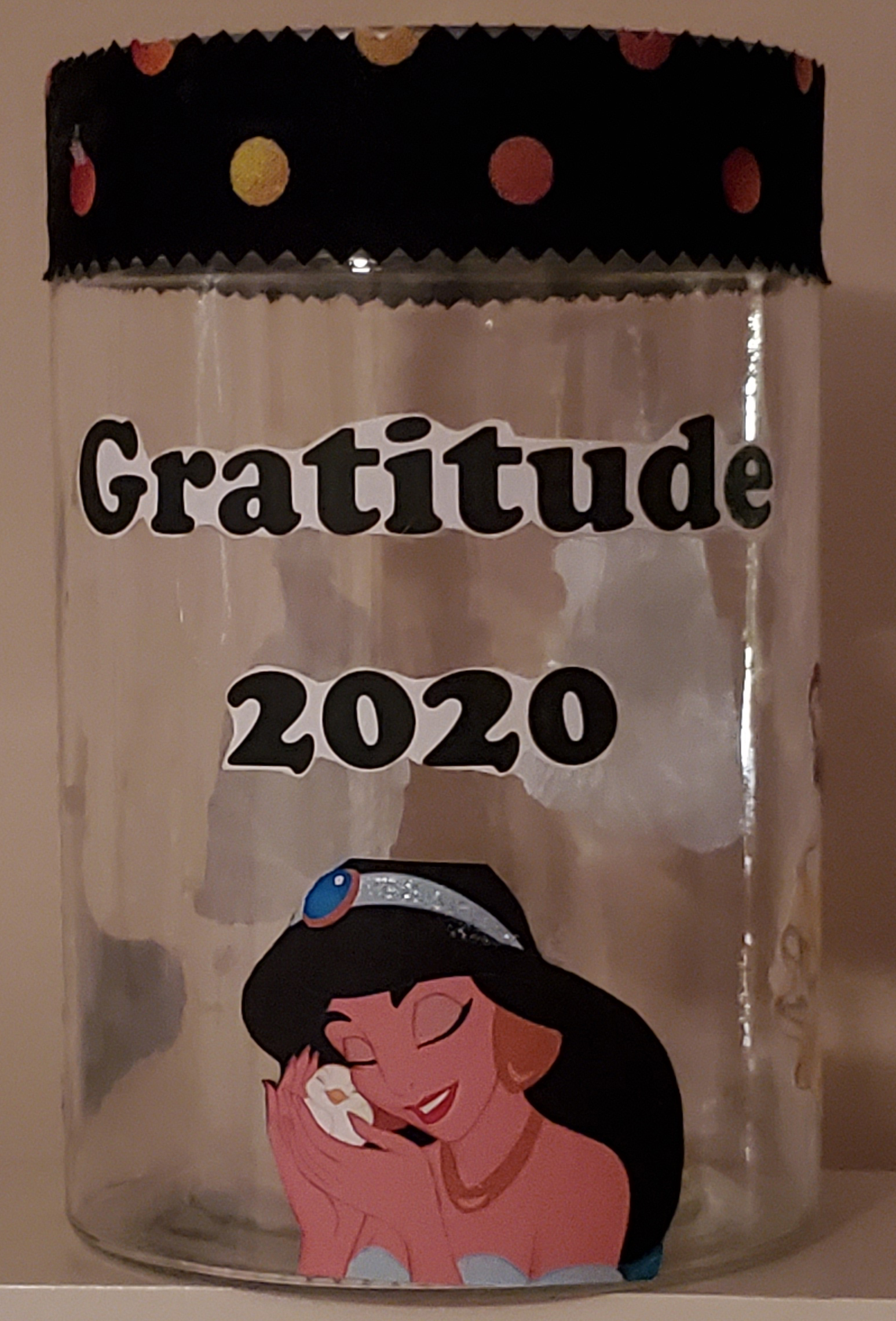
This year, one of my intentions is to use a gratitude jar, and several of my clients are joining me on this journey. A gratitude jar is a container in which I will slip written notes of moments of gratitude. I set a goal of doing this at least once a week, but I can put notes in as often as I wish. I’m also going to date each of these notes, so I’m able to place this moment in time. There’s no right or wrong way to use a gratitude jar – do whatever feels right for you. If you are grateful for peanut butter M&Ms, put that in the jar. Grateful that a friend called just to say hello? Write it down. Someone let you cut in line? You get the idea. It’s anything that makes your life a little better.

I use this as an alternative to journaling. I still believe journaling is a GREAT way to release thoughts and feelings as well as marking a journey, but I know it’s not right for everyone. Using a jar also narrows the focus towards gratitude instead of being about anything and everything. I know I like a little focus in my life.

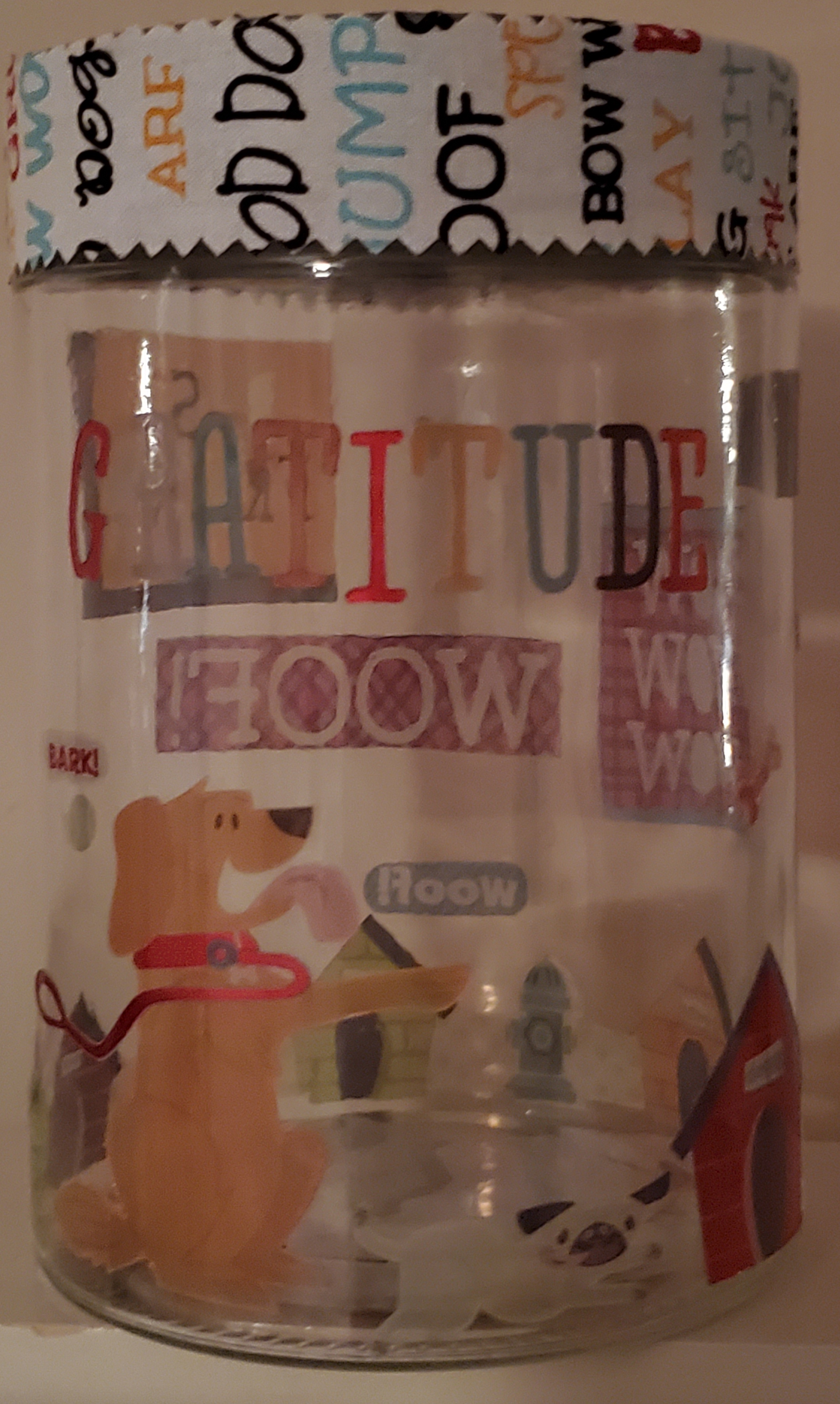
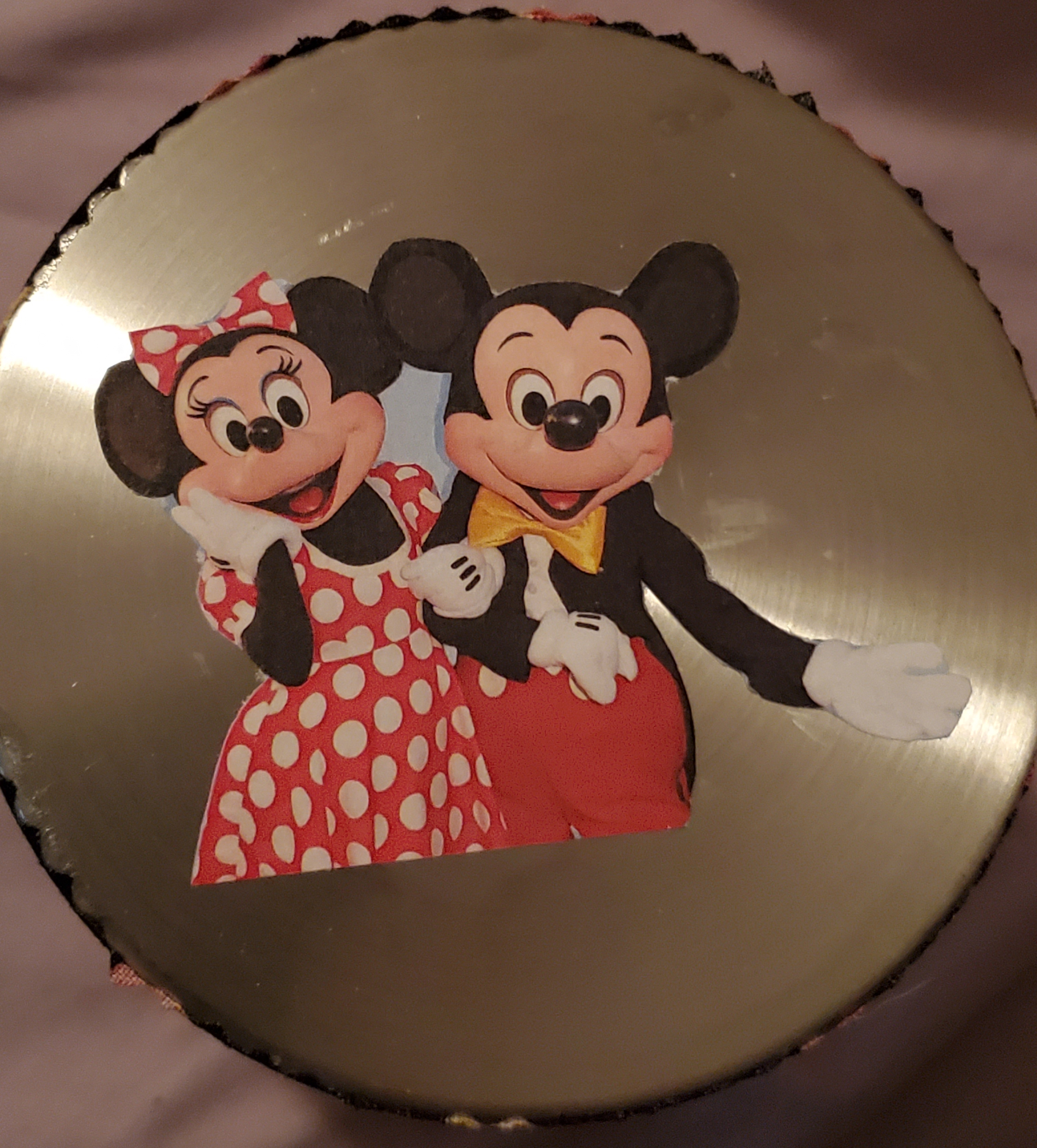
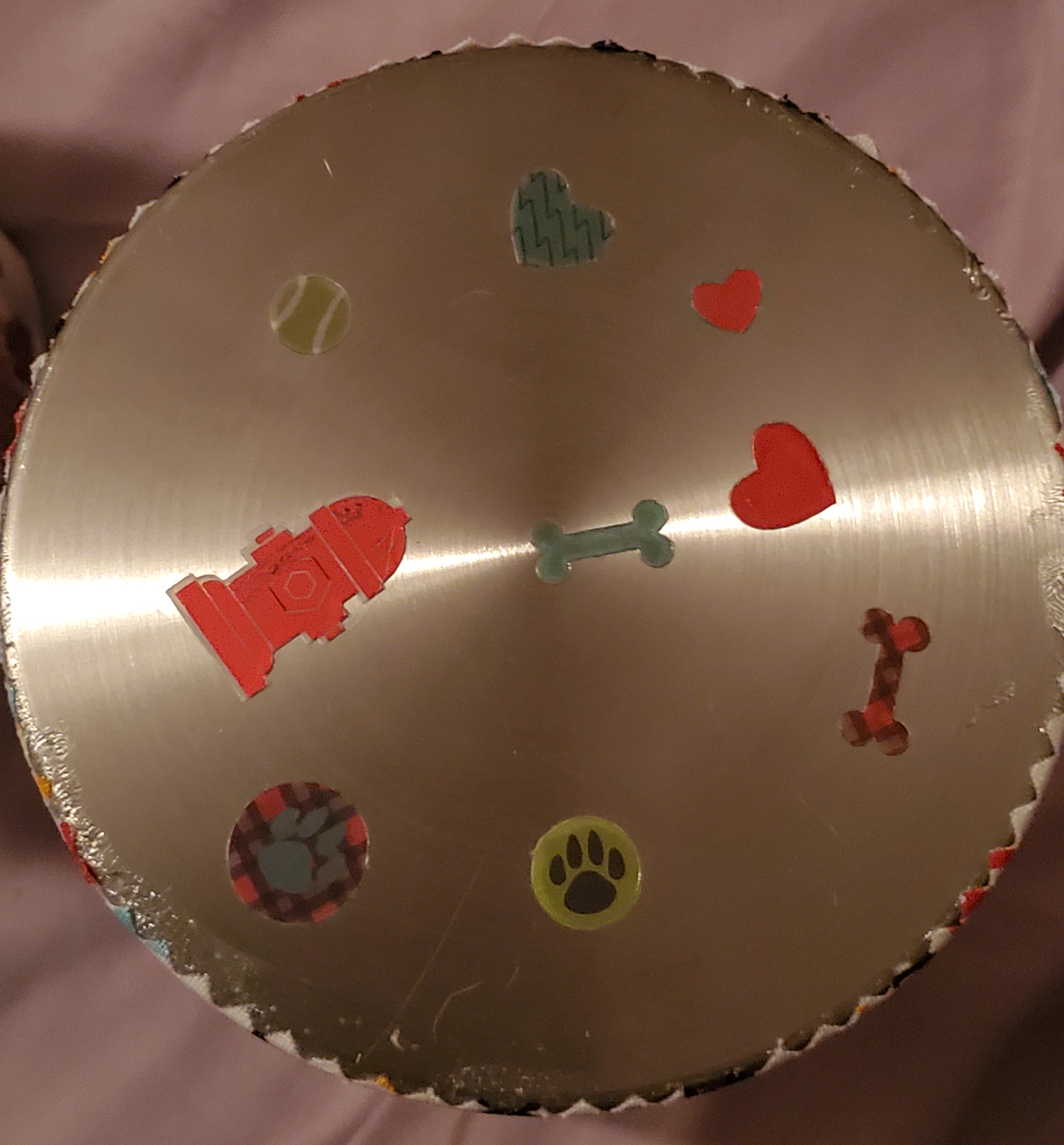
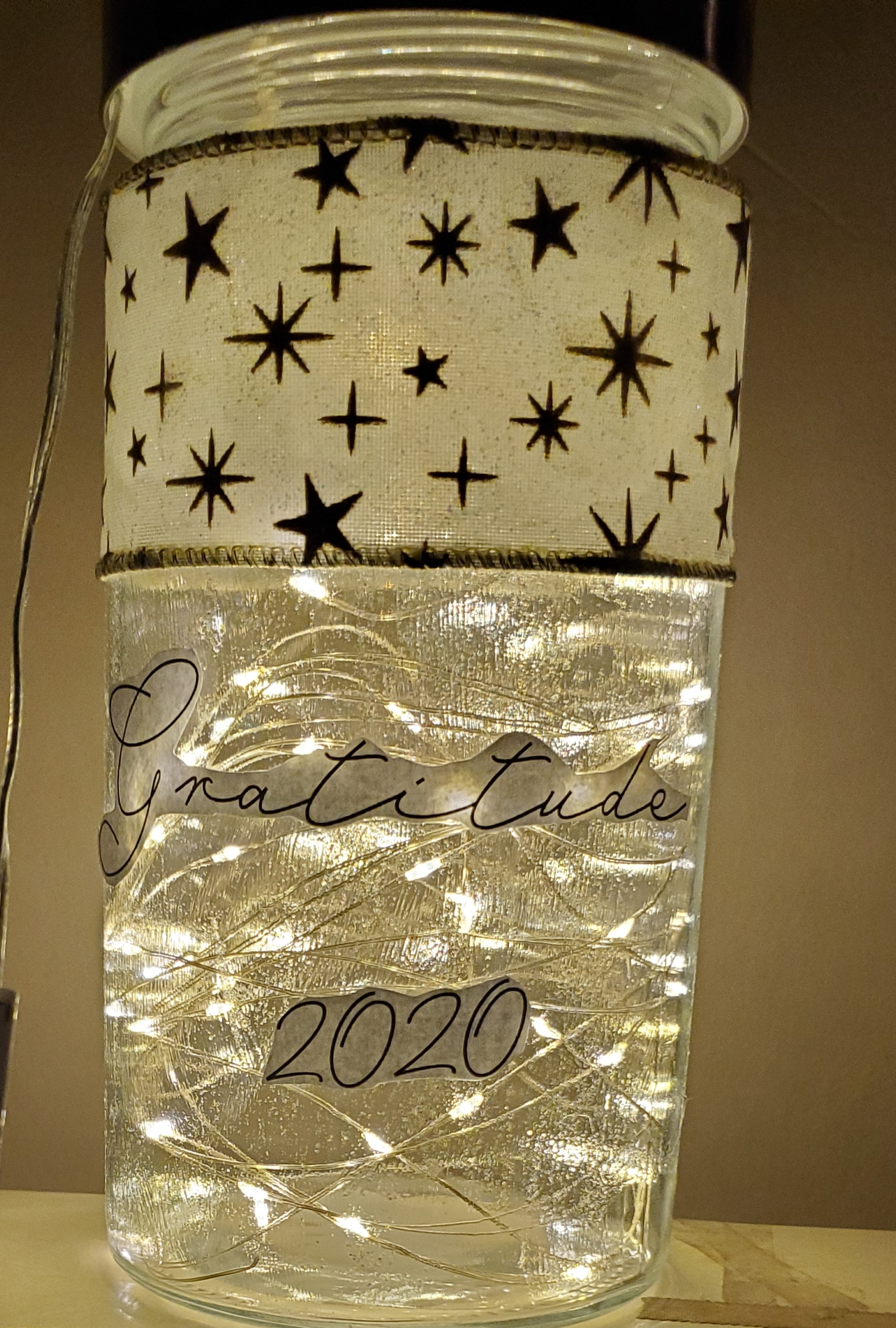
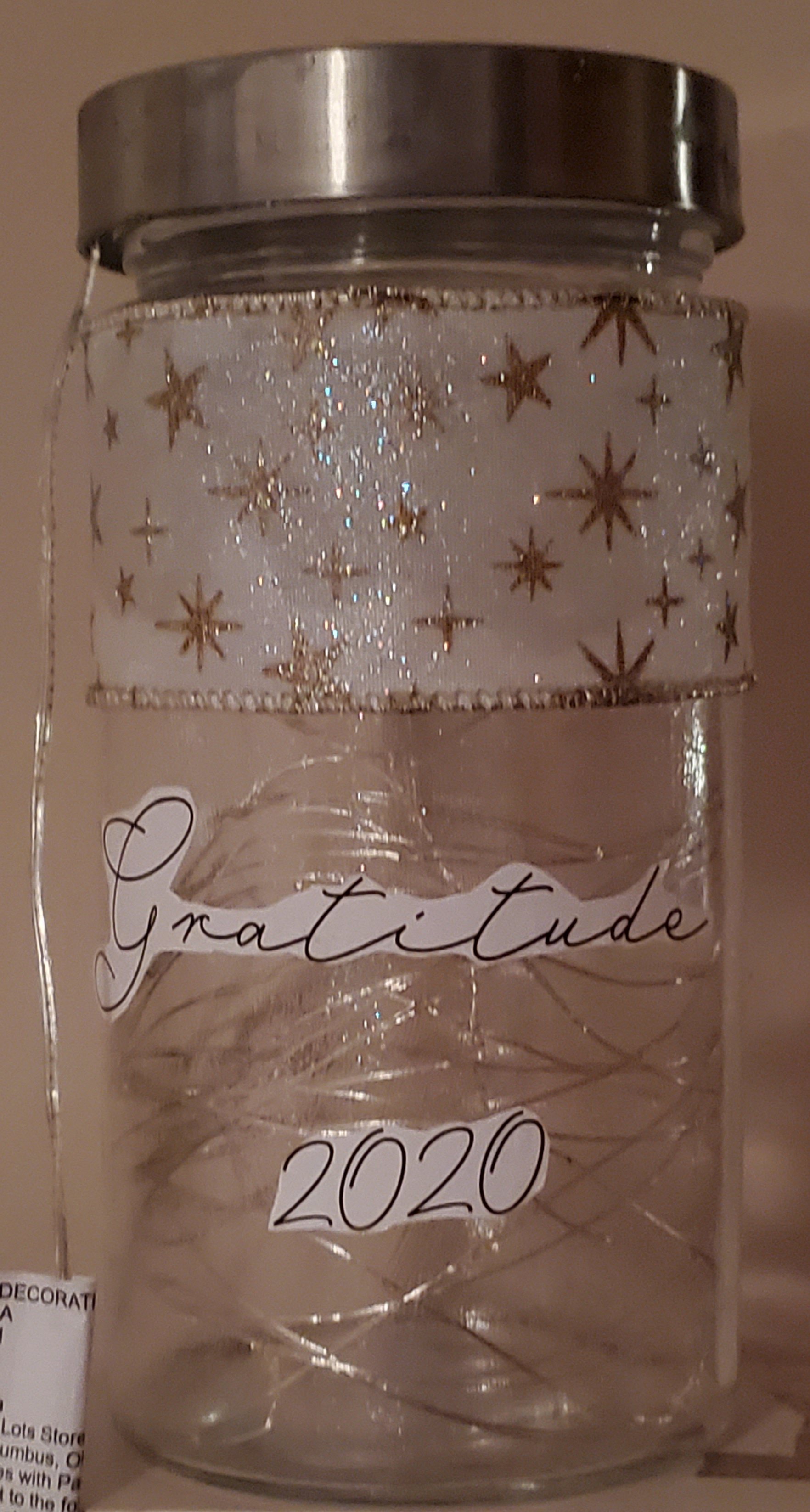
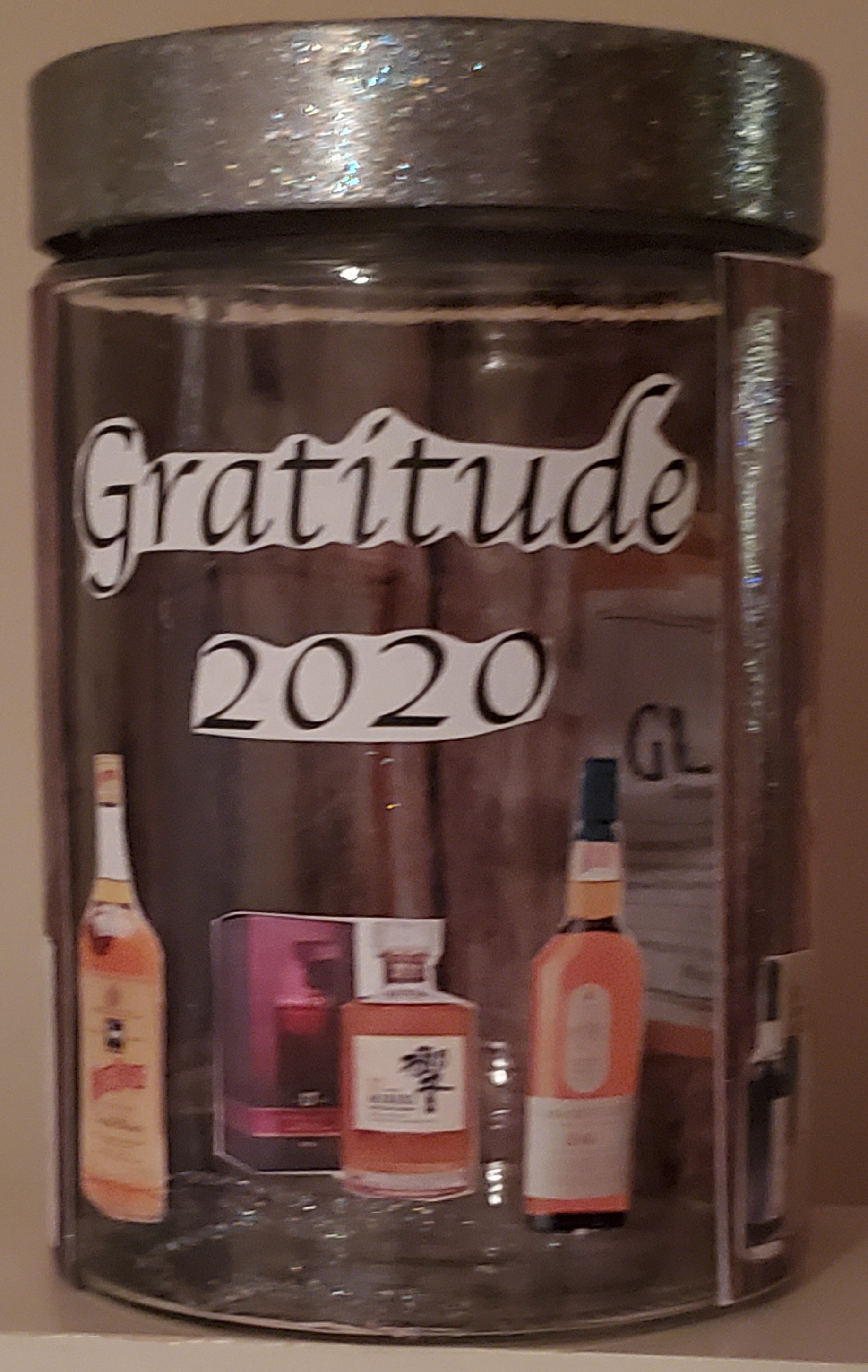
I’ve included pictures of some of the gratitude jars I’ve created for people to get you started and get the creative juices flowing. Here’s what you will need to make your own:

  • Glass Jar – plastic can work, but check your adhesive to make sure the items stick and it doesn’t warp the plastic.
  • Adhesive – I recommend Mod Podge for this. Once smoothed out, it doesn’t create ripples like school glue can. It also comes in a variety of finishes – you’ll notice my use of extreme glitter in the pictures.
  • Paper cutouts – this is how I really customized. I went online and printed out pictures of items I wanted.
  • Photos
  • Stickers – stickers used for scrapbooking are quite forgiving if you need to take them off and place them in a new place.
  • Ribbon
  • Sealant – Mod Podge works well for this but you can also use a shellac. You’ll want to make sure you protect items from the elements. Paper cutouts are especially vulnerable.

Make sure your jar is clean and free of residue. once you have adhered all your items on the jar, let is set to dry completely before applying a thin coat of sealant. Allow that to dry, and you’re all set!

Sharing your grief

I recently did a series on caring for others. This has prompted a long-term series on caring for yourself in the midst of grief. Grief can mean experiencing loss, but it can also mean anticipating or perceiving a loss. It could be a difficult diagnosis. There are many ways in which we experience the emotions of grief. My plan is to write as topics present themselves, so there is no set timeline on when these articles will be written.

The first topic I wanted to explore is sharing the information. I want to stress that your grief is your story, and only you decide who is welcome to know it… and when. There are some social constructs and there are some guides on this in terms of self-care, but in the end it is your story.

  1. Social media doesn’t have to know. Unless you need to use social media as a platform to raise funds, which sometimes happens, you don’t have to post anything there. I actually encourage people not to do it right away. Why? Social media invites conversation with anyone who sees the post. You deserve to have information and input from those who have expertise in the topic and people who will put your best interest first. Social media sometimes invites Dr. Google, Dr. Web M.D, Dr. Monday Morning – Quarterback, and a whole host of others who are not licensed to practice.
  2. Start with your inner circle. These are the people who are family or like family to you. These are the people who put your interests first. These are the people who want to hear from you personally, and you want to hear their voices while you go through “all the feels.” Telling them personally deepens your relationship at a time when relationship and feeling of being connected is so important.
  3. Trusted professionals. Google has lots of information out there – lots. Not all of it is reliable information. Speak with a professional in the field to know where the credible sources are instead of researching it on your own. If you must search, please know that sites with .edu and .gov are recommended places to start for trusted information. I have been tempted by the siren song of Google before, and my doctor has had to take the first few minutes of our appointment untangling the misinformation I received first. I highly recommend starting with the professionals first and avoiding the call of the siren.
  4. Take time for yourself. Our first reaction is generally, “I’m fine,” or “I’ll be fine.” Yes, you will be fine, but it’s okay not to be okay right now. This is why we are with professionals and our trusted inner circle. We don’t have to put on a mask, and we can just let the waves of feelings come at us. Pretending to be something we’re not (or feeling something we’re not) is exhausting, and it saps us of the strength we need to face what comes next. I have sent emails and text messages to let people know I have to break plans with them, and I briefly say why. I want them to know I’m not blowing them off, but I have something going on that requires some self-care and it’s important that I do it right now. Could I have gone to that meeting, class, or workshop? Sure. Right now, though, I need me time, and that’s okay.

    Remember, even on airplanes, we are reminded to put on our own oxygen masks before assisting others.
  5. Making it public. When you’re ready, go ahead and make it public – this also includes updates. When your inner circle knows, when you have plans in place, when you have solid information behind you – go ahead it make it known to others what is happening in your life. Most people will be supportive. Some will offer advice in that desire to be supportive, but you will be able to parcel what is good, unhelpful, and something to ask at your next appointment now.

#selfcare #grief #petloss